
Optimizing Patient Care: The Vital Role of Nurses in the Successful Implementation of HIS

Optimizing Patient Care: The Vital Role of Nurses in the Successful Implementation of HIS Operational Challenges in HospitalsCurrently, many hospitals still face administrative complexities that hinder healthcare delivery. Reliance on conventional (paper-based) systems frequently triggers obstacles such as data overlap, prolonged patient waiting times, and the risk of human error in medical documentation. These challenges not only impede administrative performance but also directly impact the workflow efficiency of healthcare professionals on the ground. Nurses in Patient CareNurses act as the front line, interacting directly with patients 24/7. The quality of hospital services depends heavily on the speed and precision of nursing interventions. Amidst high workload demands, nurses require system support capable of bypassing manual processes, allowing them to shift their focus from administrative tasks back to the core essence of their profession: providing optimal nursing care to patients. Why HIS and EMR are MandatoryThe implementation of a Hospital Information System (HIS) and Electronic Medical Records (EMR) is not merely a transition from paper to digital screens. It is a strategic step toward creating a transparent and accountable data ecosystem. Recognizing the critical need for an integrated information system is key to a hospital’s success in minimizing clinical risks and enhancing patient safety. With the right system, every medical record becomes standardized, easily accessible to authorized personnel, and accelerates the clinical decision-making process. An Integrated Solution for Hospital EfficiencyTo answer these operational challenges, Medinfras serves as a strategic partner for hospitals. Through precisely engineered technology, Medinfras simplifies complex administrative workflows into highly efficient processes. Our system enables seamless data integration across departments, ensuring that all medical information is stored securely, accurately, and in real-time, thereby thoroughly resolving operational bottlenecks that hinder service delivery. The Transformational Role of Nurses Post-Medinfras ImplementationFollowing the implementation of the Medinfras EMR system, the role of nurses undergoes a highly positive shift. Nurses are no longer burdened by repetitive administrative tasks. Supported by an intuitive system, nursing documentation can be completed faster and more accurately digitally. As a result, nurses have more time to observe patients, provide health education, and respond to patient needs with greater agility. With Medinfras, nurses not only perform as competent medical practitioners but also act as intelligent system operators, ensuring that every minute of hospital service delivers maximum impact for patient recovery and comfort. PT Quantum Infra Solusindo stands ready to accompany your hospital on its digital transformation journey, delivering technology that humanizes healthcare delivery.
Work Hard, Stay Healthy: A Practical Guide for Busy Professionals

Work Hard, Stay Healthy: A Practical Guide for Busy Professionals In today’s fast-paced work environment, maintaining a healthy lifestyle can be challenging. However, staying healthy does not always require extra time simple, consistent habits can make a significant difference. Professionals with demanding schedules can adopt an efficiency focused approach to wellness, such as stretching at their desks, choosing stairs over elevators, staying well hydrated, and opting for healthy snacks like fruits. In addition, effective stress management and quality sleep play a crucial role in maintaining immunity and overall stamina. Below is a structured guide to help busy professionals stay healthy: Balanced Nutrition and Eating Habits Proper nutrition is the foundation of good health. Do not skip breakfast to maintain energy throughout the day Choose healthy snacks such as fruits, nuts, or yogurt Bring home prepared meals to better control sugar, salt, and fat intake Stay hydrated to support concentration and endurance Light Physical Activity (Micro Workouts)Physical activity does not always require a gym simple movements are effective. Perform light stretching every 1–2 hours Take the stairs instead of the elevator Use break time for a short walk Set reminders to stand up and move regularly Stress Management and Mental Well beingMental health is just as important as physical health. Practice relaxation techniques such as deep breathing Take short breaks to refresh your mind Limit excessive caffeine intake to reduce anxiety Maintaining Stamina and Sleep QualityProper recovery supports optimal performance. Aim for 7–8 hours of sleep each night Schedule regular health check-ups for early detection Adopting a healthy lifestyle does not have to be complicated. By consistently practicing small, simple habits, busy professionals can maintain productivity without sacrificing their physical and mental well-being.
Safer and More Controlled Drug Distribution with e-UDD in the Medinfras Hospital Information System (SIM-RS)
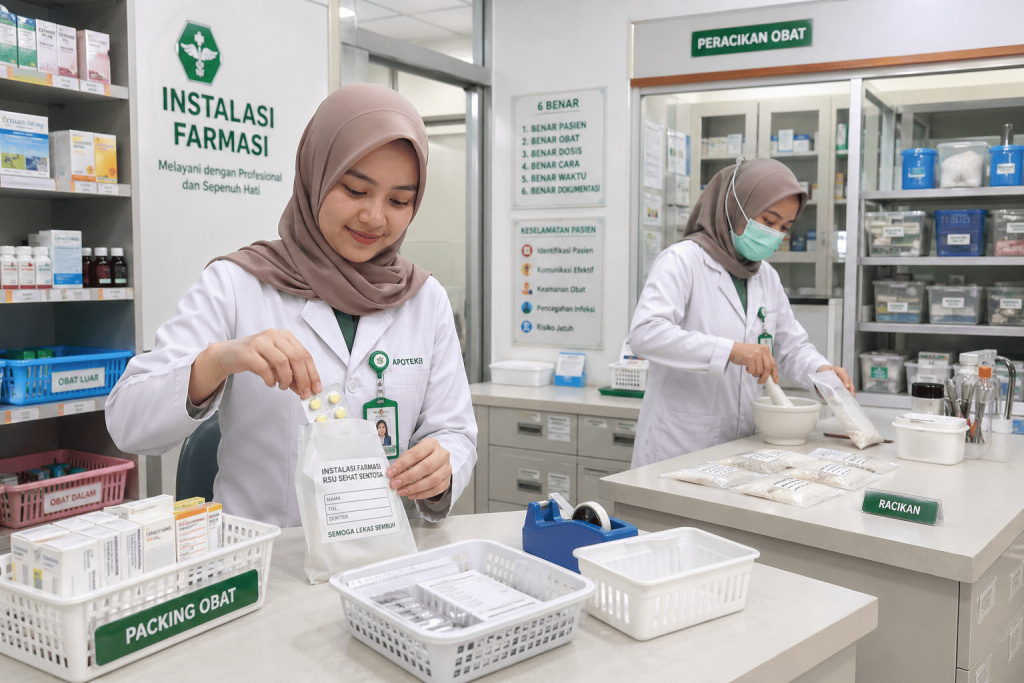
Safer and More Controlled Drug Distribution with e-UDD in the Medinfras Hospital Information System (SIM-RS) Implementing e-UDD (Electronic Unit Dose Dispensing) in Hospital Information Systems to Enhance Medication Safety and Efficiency Pharmacy services are one of the most crucial components in hospital operations. Accuracy in medication administration not only affects service quality but also directly impacts patient safety. To improve the accuracy and efficiency of drug distribution, many hospitals have begun implementing Electronic Unit Dose Dispensing (e-UDD) integrated with the Hospital Information System (SIM-RS). This digitalization helps hospitals manage the drug dispensing process in a more systematic, controlled, and well-documented manner. What Is e-UDD (Electronic Unit Dose Dispensing)? Electronic Unit Dose Dispensing (e-UDD) is a hospital medication distribution system in which drugs are dispensed to patients in single-dose (unit dose) form, according to the doctor’s prescription for a specific time period—usually per dose or per day. With the integration of Electronic Medical Records (EMR) and online prescriptions in SIM-RS, the entire process—from prescription entry and pharmacy verification to medication distribution—can be performed digitally and monitored in real time. e-UDD Feature Availability in SIM-RS Medinfras Medinfras has been developing the e-UDD feature since 2016, continuously refining it in subsequent years. Once integrated with SIM-RS, the pharmaceutical workflow becomes more efficient and controlled. The implementation process of e-UDD in Medinfras includes the following stages: Online Prescription Entry by Doctors Physicians input prescriptions directly through the Medinfras Electronic Medical Record (EMR) system. The prescriptions are automatically transmitted to the pharmacy for verification. Verification by Pharmacists Pharmacists review incoming prescriptions, checking dosages, potential drug interactions, and treatment suitability for each patient. Unit Dose Dispensing Process Once verified, the pharmacy prepares medications in unit doses according to patient needs and the automatic administration schedule set by the doctor’s prescription. Medication Distribution to the Ward The packaged doses are delivered to wards or care units in accordance with the medication schedule. Automatic Recording in Medinfras Every step—from dispensing and distribution to medication administration—is recorded in the Medinfras system, enabling comprehensive monitoring and auditing. Benefits of Implementing e-UDD in Hospitals The adoption of Medinfras e-UDD brings several important benefits: Enhanced Patient Safety The system minimizes medication errors such as wrong dosage, wrong patient, or incorrect timing. Reduced Drug Waste By dispensing medications in unit doses, the system ensures drugs are administered according to patient needs, significantly reducing waste. Improved Pharmacy Operational Efficiency The dispensing process becomes more structured and easier to monitor by the pharmacy team. Accurate Monitoring of Drug Usage Hospital management can monitor drug usage in real time through detailed reports generated by SIM-RS. Supports Hospital Accreditation Standards e-UDD implementation aligns with patient safety and medication management standards required in hospital accreditation processes. Implementation Challenges Despite its many advantages, e-UDD implementation also requires several preparations, including workflow adjustments in the pharmacy department and training programs for pharmacists and healthcare personnel. For example, National Hospital Surabaya, one of Medinfras’s clients, successfully turned these challenges into achievements by winning the Healthcare Asia Awards 2019 – ICT Initiative of the Year for introducing the first Electronic Unit Daily Dose (e-UDD) barcode system for medication distribution. Similarly, Dr. Lienliaty, MARS, Head of the Medical Support Division at RS Royal Taruma Jakarta, shared her experience using Medinfras: “The hospital began implementing e-prescriptions and UDD for inpatients. Our pharmaceutical management has become more integrated, significantly improving pharmacy operations—from procurement and sales to inventory and use of consumable materials. Supported by a stock opname system, it also simplifies monitoring of drug and medical supply availability. Medinfras continues to enhance its system to further improve service quality.” The implementation of e-UDD in Medinfras represents a strategic step toward improving medication safety, efficiency, and transparency in hospital drug management. This system not only supports healthcare professionals in performing their duties more effectively but also plays a vital role in enhancing patient safety. As healthcare digitalization advances, the integration of pharmacy systems such as e-UDD has become an essential component in realizing modern, efficient, and patient-safety–oriented hospitals.
Indonesia Introduces Nutri-Level: A New Weapon Against Excess Sugar Consumption

Indonesia Introduces Nutri-Level: A New Weapon Against Excess Sugar Consumption Source: Ministry of Health of the Republic of Indonesia (Photo: MoH Indonesia) The Ministry of Health of the Republic of Indonesia has issued a new regulation requiring nutrition labeling for ready-to-serve food and beverages in order to encourage healthier consumption habits among the public. The regulation is outlined in Minister of Health Decree No. HK.01.07/MENKES/301/2026 concerning the inclusion of nutritional labels and health messages on ready-to-serve food products, which was issued on Tuesday, April 14. According to the Minister of Health, Budi Gunadi Sadikin, this policy is intended as an educational effort to prevent excessive consumption of sugar, salt, and fat (SSF), which can lead to various non-communicable diseases such as obesity, hypertension, cardiovascular disease, stroke, and type 2 diabetes. As an illustration, four diseases that create the largest financial burden for BPJS Kesehatan are closely related to excessive SSF consumption. For example, healthcare spending for kidney failure increased by more than 400%, rising to IDR 13.38 trillion in 2025, compared to only IDR 2.32 trillion in 2019. “Therefore, it is necessary to provide information and education so that the public can more easily choose ready-to-serve foods that are appropriate and healthy according to their needs,” said Minister Budi Gunadi Sadikin. He also added that this policy is part of the mandate of Indonesia’s Health Law, which requires cross-sector policies for disease prevention to be aligned. “The Health Law mandates the alignment of policies across sectors. The Ministry of Health is responsible for regulating ready-to-serve food, while processed or manufactured food products fall under the authority of the Indonesian Food and Drug Authority,” he explained. At the initial stage, this decree does not target micro, small, and medium-sized ready-to-serve food businesses, such as small food stalls (warteg), street vendors, or small restaurants. However, ready-to-serve sweetened beverages—such as boba drinks, teh tarik, palm sugar milk coffee, and fruit juices produced by large-scale businesses—are required to display nutrition labels and health messages in the form of Nutri-Level indicators. This requirement aims to educate the public and reduce excessive consumption of sugary beverages. These Nutri-Level labels must be displayed through various information media, including: Menu lists Retail packaging Brochures Banners Flyers Electronic commercial menu applications Leaflets Other promotional information media What Is Nutri-Level? Nutri-Level is a nutritional labeling system that indicates the level of sugar, salt, and fat (SSF) contained in a food or beverage product. The label uses letters and colors to help consumers easily understand the nutritional health level of the product. The Nutri-Level categories consist of: Nutri-Level values are expressed as percentages (%) or measurements in grams or milligrams per 100 milliliters (g/100 ml or mg/100 ml). Source: Minister of Health Decree No. HK.01.07/MENKES/301/2026 on the inclusion of nutritional labels and health messages on ready-to-serve processed food. Level A represents the lowest sugar, salt, and fat content, Level B, Level C, and Level D with progressively higher levels. Businesses determine the Nutri-Level classification through self-declaration based on laboratory testing results, conducted by government laboratories or other accredited laboratories. Nutri-Level Label Format The Nutri-Level indicator can appear in vertical or horizontal formats, depending on the design and placement within the product information media. These labels may be displayed on: Beverage packaging Restaurant or café menus Product posters or flyers Brochures and advertisements The goal of this labeling system is to provide clear nutritional information and help consumers make healthier choices when purchasing ready-to-serve foods and beverages. Source: Nutri-Level labeling guidelines by the Ministry of Health of the Republic of Indonesia. Nutri-Level labels will also appear on beverage packaging, restaurant or café menus, product posters or flyers, as well as brochures and advertisements. Source: Nutri-Level labeling guidelines by the Ministry of Health of the Republic of Indonesia.
Why Database Backup Is Essential for Hospitals: Rules and How to Implement It

Why Database Backup Is Essential for Hospitals: Rules and How to Implement It The Importance of HIS Database BackupThe Hospital Information System (HIS) is the backbone of modern hospital operations. It stores critical data such as patient medical records, financial data, medication inventory, doctor schedules, and management reports. The loss or corruption of this data can have serious consequences—operationally, legally, and reputationally.Below are several key reasons why HIS database backup is crucial: Preventing Data LossPower outages, human error, hardware failures, or cyberattacks (such as ransomware) can delete or corrupt important data. Regular backups ensure that data remains available even if the primary system fails. Ensuring Continuity of Healthcare ServicesHospitals operate 24/7 and must maintain uninterrupted services. With a proper backup system, data recovery can be performed quickly, minimizing service disruptions. Regulatory ComplianceRegulations such as Indonesian Ministry of Health Regulation No. 24 of 2022 on Electronic Medical Records emphasize the importance of medical data security and integrity. Database backup is a key component in complying with these regulations. Supporting Audits and Data ForensicsBackups can assist in audit processes or investigations in the event of security incidents or data disputes. HIS Database Backup StandardsTo ensure effectiveness and align with industry best practices, HIS database backup should follow the standards below: a. Backup Frequency Daily Backup: A full backup should be performed daily after operational hours to copy the entire database. Incremental/Differential Backup: Additional backups performed every few hours to capture recent changes in the data since the last full backup. Log Backup: Stores transaction logs to enable point-in-time recovery, allowing restoration to a specific moment before an incident occurs.Real-Time Replication (Optional): For large-scale systems, databases can be replicated in real time between the primary server and backup server. b. Storage Location On-site: Stored within the hospital environment (e.g., backup servers). Off-site / Cloud: Stored outside the primary location, such as encrypted cloud storage. A combination of both is known as the 3-2-1 backup strategy: 3 copies of data 2 different storage media 1 copy stored in a separate physical location (off-site) c. Security and Encryption All backup files should be encrypted to protect sensitive patient data. Access to backups must be restricted to authorized personnel only. Strong authentication systems and audit logs should be implemented to monitor access. d. Regular Restore TestingBackups that are never tested may fail when they are actually needed. Therefore, IT teams should perform periodic restore simulations to ensure that backup files can be successfully used for recovery. e. Documentation and Standard Operating Procedures (SOP)Database backup should be integrated into the hospital’s operational procedures, including: Backup schedules and automation procedures Assigned backup administrators or responsible personnel Data recovery procedures Backup logs and verification records Database backup is not merely a technical requirement; it is a crucial part of a hospital’s data security strategy and service continuity plan. By implementing proper backup practices such as scheduled backups, separate storage locations, and regular restore testing hospitals can ensure their data remains secure and healthcare services continue without disruption.Investing in a reliable backup system is an essential step in maintaining the reliability, security, and sustainability of hospital information systems.
Building a Hospital’s Digital Fortress: The Urgency of Cybersecurity and the Role of Pentesting
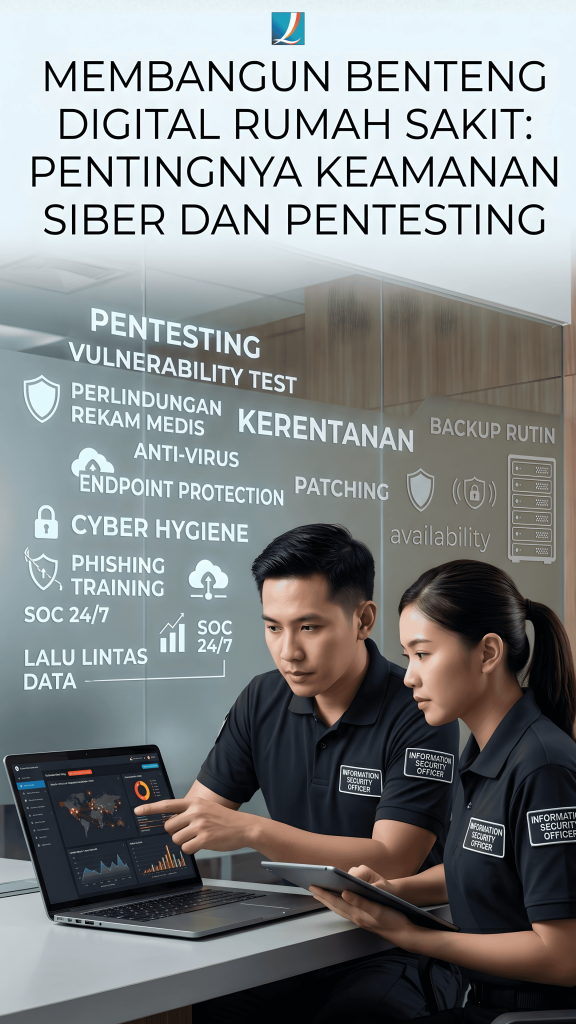
Building a Hospital’s Digital Fortress: The Urgency of Cybersecurity and the Role of Pentesting In the era of healthcare digitalization, hospital operations are deeply dependent on their technological infrastructure. This digital transformation opens vulnerabilities to massive cyber threats, with Ransomware being one of the most prominent. Ransomware is a type of malicious software (malware) that encrypts a victim’s data and demands a ransom payment for decryption. For healthcare facilities, protecting medical records is not just a technical operational issue; it directly impacts patient lives.Therefore, let’s dissect crucial cybersecurity strategies from a technical perspective, specifically regarding Vulnerability Testing or Pentesting. Understanding Vulnerability Test: PentestingIn the world of software engineering and cybersecurity, Penetration Testing (Pentest) is a periodic simulated cyberattack process to test the resilience of a system’s architecture against real-world attacks. This practice is conducted legally and ethically by security engineers to find security flaws (bugs or configuration vulnerabilities) in applications and networks before hackers can exploit them. By proactively identifying these vulnerabilities, IT teams can immediately release security updates or patching. Why Perform Pentesting?Hospitals are high-value targets for cyber syndicates. Based on the latest reports from the National Cyber and Crypto Agency (BSSN) in 2025, Indonesia experienced a 60% increase in cyberattacks during the first semester, with Ransomware remaining a frequent and destructive threat to vital infrastructure.The impact of cyberattacks on health infrastructure can be fatal: German Incident: A ransomware attack at Duesseldorf University Clinic paralyzed the hospital system and forced the closure of the emergency department. This required a patient with a life-threatening condition to be diverted to another hospital 32 km away, leading to delayed treatment and the patient’s death. UK Incident: At the NHS London network, disruptions to pathology services due to ransomware caused delays in blood test results, which were confirmed to contribute to a patient’s death.Periodic pentesting is an absolute procedure to ensure every vulnerability in the health network is closed, protecting the availability of hospital systems and patient medical records. Prevention and Mitigation StrategiesIn addition to system testing through pentests, a layered security architecture is required: Routine Data Backup: Perform data backups regularly, both offline and using trusted cloud services, so data can be restored at any time. Endpoint Protection: Use official anti-virus and endpoint protection software, and ensure all software and operating systems are updated automatically. Cyber Hygiene: Train all medical and administrative staff to be aware of phishing threats and practice good cyber hygiene. Security Operations Center (SOC): Establish a SOC for 24/7 network monitoring to detect, analyze, and respond to data traffic incidents quickly.Important: If a data hijacking incident occurs, avoid paying the ransom as it motivates criminals to continue. There is no guarantee that hackers will provide the decryption key, and the risk of re-infection or permanent file damage remains high. Medinfras Commitment to HospitalsAs the developer of the Hospital Management Information System (SIM-RS) Medinfras, PT Quantum Infra Solusindo realizes that hospital database security is non-negotiable. We prioritize cybersecurity as our primary code foundation.We ensure to all our customers that Medinfras has implemented strict and continuous software and infrastructure pentest procedures. This preventive step ensures that the software ecosystem supporting your operations is free from dangerous injection or exploitation gaps. Through a strong mitigation commitment, we guarantee that all customer data and patient medical record privacy will always be protected from all forms of cyberattacks.
EMR CONNECT Medinfras: Medical Records at Doctors’ Fingertips via Tablet

EMR CONNECT Medinfras: Medical Records at Doctors’ Fingertips via Tablet Digital transformation in the healthcare sector demands speed, mobility, and accuracy in medical services. Addressing these needs, EMR Mobile Medinfras also known as EMR CONNECT Medinfras emerges as a mobile based electronic medical record solution that enables doctors to access patient data in real time through tablets or iPads. This innovation empowers healthcare professionals to deliver more efficient care without being tied to a workstation or desktop computer. High Mobility for Faster CareWith EMR CONNECT Medinfras, doctors can access patient information anytime and anywhere within the hospital environment from inpatient wards, emergency rooms, and ICUs to procedure rooms. Critical data such as medical history, laboratory results, radiology reports, allergies, current medications, and previous clinical notes are instantly available in a single integrated view. This level of mobility is particularly valuable in critical situations that require rapid decision-making, helping reduce patient waiting times while improving the overall quality of care. Real-Time Clinical Data Entry at the Point of CareUsing a tablet, doctors can document clinical findings directly in front of the patient (point-of-care documentation). Physical examinations, diagnoses, treatment plans, and prescriptions can all be entered digitally without the need to return to a doctor’s office.This approach not only saves time but also minimizes the risk of errors caused by manual documentation or delayed data entry. In addition, doctors can verify and validate clinical records and apply digital signatures seamlessly through EMR CONNECT Medinfras. Tablet-Friendly and User-Centric InterfaceThe EMR CONNECT Medinfras interface is specifically designed for touchscreens, ensuring intuitive navigation and ease of use. With optimally sized buttons, simplified menus, and workflows aligned with clinical processes, doctors can quickly adapt to the system without disrupting their daily routines. Enhancing Efficiency and Quality of CareThe implementation of mobile EMR solutions delivers significant benefits not only for doctors but also for healthcare institutions, including: Accelerated clinical workflows Reduced paper usage (paperless environment) Improved accuracy of medical documentation Data-driven clinical decision support Increased satisfaction for both patients and healthcare professionalsEMR CONNECT Medinfras represents a strategic step toward building a modern, efficient, and patient-centered digital hospital. By enabling access through tablets, doctors can work more flexibly, responsively, and productively—ultimately delivering healthcare services that are faster, safer, and of higher quality.
Scaling Up for Better Service: Blessing and Inauguration of PT Quantum Infra Solusindo’s New Office Facility

Scaling Up for Better Service: Blessing and Inauguration of PT Quantum Infra Solusindo’s New Office Facility In the fast-paced era of digital health transformation, PT Quantum Infra Solusindo, through its flagship Hospital Information System (SIMRS) product, Medinfras, continues to strengthen its presence. Trusted and utilized by various hospitals across Indonesia, PT Quantum Infra Solusindo is more than just an application provider. We are a dedicated strategic partner, providing responsive technical and operational support to ensure seamless healthcare services.As the healthcare ecosystem’s trust in Medinfras grows, we recognize the vital importance of scaling up our service capacity. A Milestone of Growth and GratitudeAs a concrete step toward this goal, on Friday, February 27, 2026, PT Quantum Infra Solusindo proudly held the Blessing and Inauguration Ceremony for our new office building, which serves as an expansion of our operational facilities.This moment of gratitude was attended by our Shareholders, Commissioners, Directors, Managers, and the entire big family of PT Quantum Infra Solusindo employees. Dedicated to Our CustomersBeyond the new facilities and the inauguration ceremony, there is one truth we hold above all: this building would not stand without the unwavering support of our Medinfras customers. From the bottom of our hearts, we express our deepest gratitude to all our customers who have faithfully walked alongside PT Quantum Infra Solusindo. This expanded facility is a tangible manifestation of the trust you have placed in us. Looking Toward the FutureAs a company driven by innovation, the opening of this new building carries with it even stronger aspirations and commitments. Thank you for making Medinfras the backbone of your hospital information system and Together let us realize the future of healthcare one that is integrated, reliable, and innovative!
Accelerating Hospital Document Legality: Medinfras x VIDA Integrated Certified Electronic Signatures

Accelerating Hospital Document Legality: Medinfras x VIDA Integrated Certified Electronic Signatures In today’s era of digital health transformation, complying with government regulations regarding the legality of electronic documents is no longer optional it is a fundamental necessity for every healthcare institution in Indonesia. PT Quantum Infra Solusindo, through its flagship product Medinfras, continues to prove its commitment as a leading local Hospital Information System (SIMRS) provider that is both adaptive and solution-oriented. Meeting Regulatory Challenges with Superior Bridging TechnologyA core strength of Medinfras lies in the flexibility and robustness of its Bridging system. We understand that a hospital’s digital ecosystem involves various platforms that must communicate with each other seamlessly. To address government policies concerning the validity of medical and administrative documents (in accordance with UU ITE No. 19/2016 and PP 71/2019), Medinfras has officially entered into a strategic collaboration with PT Indonesia Digital Identity (VIDA). VIDA is a Root-Certified Electronic Certificate Provider (PSrE) that is legally recognized and certified in Indonesia. Real-World ImplementationThis collaboration is more than just a plan; it is already in motion. Currently, Medinfras is executing its first Electronic Signature (TTE) implementation project at a private hospital. This project marks a milestone for Medinfras in delivering a fully integrated TTE solution directly within the SIMRS environment. What Sets Our Solution Apart? Rapid Integration: Through an optimized bridging process, the implementation of VIDA into the Medinfras ecosystem is highly efficient and time-saving. Instant Validation: Every document issued features a valid TTE printout that is legally binding and accountable. Bulk Sign Feature: Designed for high-mobility medical staff, Medinfras allows for the signing of multiple documents simultaneously with just one click, significantly reducing administrative overhead. Verification & Authenticity: The validity of every signed document can be tested at any time, ensuring data security and legal protection for both the hospital and the patient. New Opportunities for Medinfras Customers The partnership between Medinfras and VIDA opens significant opportunities for our hospital partners to meet accreditation standards and government regulations without disrupting existing workflows. With Medinfras, your hospital isn’t just going digital it is moving toward a system that is legal, secure, and highly efficient. Ready to take your hospital to the next level? Optimize your document legality with Medinfras and VIDA. Contact our team for further consultation regarding TTE integration in your hospital.
Hosptial Information System Medinfras Bridging with SmartClaim JKN: Advancing Digital Healthcare Claims in Indonesia

To improve service quality for participants of the National Health Insurance Program (JKN), BPJS Kesehatan has introduced a series of technology-driven innovations powered by Artificial Intelligence (AI). One of the flagship initiatives is the Smart Integrated Solution Customer Assistant (SISCA) JKN, an AI-based platform designed to enhance customer services. In addition, BPJS Kesehatan has developed three other major innovations: Smart Claim JKN, Smart Analysis, and Smart Insight, all aimed at strengthening the efficiency, transparency, and effectiveness of Indonesia’s healthcare financing system. AI-Powered Claim VerificationSmart Claim JKN is an AI-based claim verification system designed to assist verifiers in accelerating the review process of JKN healthcare claims while improving the quality of preliminary examinations. By leveraging artificial intelligence, the system can identify patterns, detect anomalies, and prioritize claims that require deeper analysis. According to Edwin Aristiawan, Director of Information Technology at BPJS Kesehatan, the technology is expected to enable verifiers to focus their attention on complex claims or areas that need further assessment, thereby improving accuracy and reducing processing time. Sumber: https://www.mnctrijaya.com/news/detail/75408/makin-canggih-empat-inovasi-layanan-berbasis-ai-bpjs-kesehatan Hosptial Information System Medinfras Integration with Smart Claim JKNResponding to this national digital transformation, Hosptial Information System Medinfras a Hospital Information System developed to support modern healthcare operations is being enhanced to work seamlessly alongside BPJS Kesehatan through a dedicated Smart Claim JKN integration (bridging).This integration enables hospitals using SIM-RS Medinfras to connect directly with the Smart Claim JKN platform, allowing for: Faster electronic claim submission Reduced manual data entry and errors Improved claim accuracy and completeness Real-time monitoring of claim status Streamlined administrative workflows Ultimately, healthcare providers will experience a more efficient and reliable claim management process, while JKN participants benefit from faster service continuity and financial assurance. Supporting Indonesia’s Digital Health EcosystemThe integration between SIM-RS Medinfras and Smart Claim JKN represents a significant step toward building a fully connected digital healthcare ecosystem in Indonesia. By aligning hospital systems with national insurance platforms, this initiative supports transparency, operational efficiency, and sustainable healthcare financing.As BPJS Kesehatan continues to deploy AI-driven solutions across its services, collaborations with hospital information system providers such as Hosptial Information System Medinfras will play a crucial role in ensuring that technological innovation translates into tangible improvements in patient care and administrative performance.