
Medinfras In CEO Forum 2026
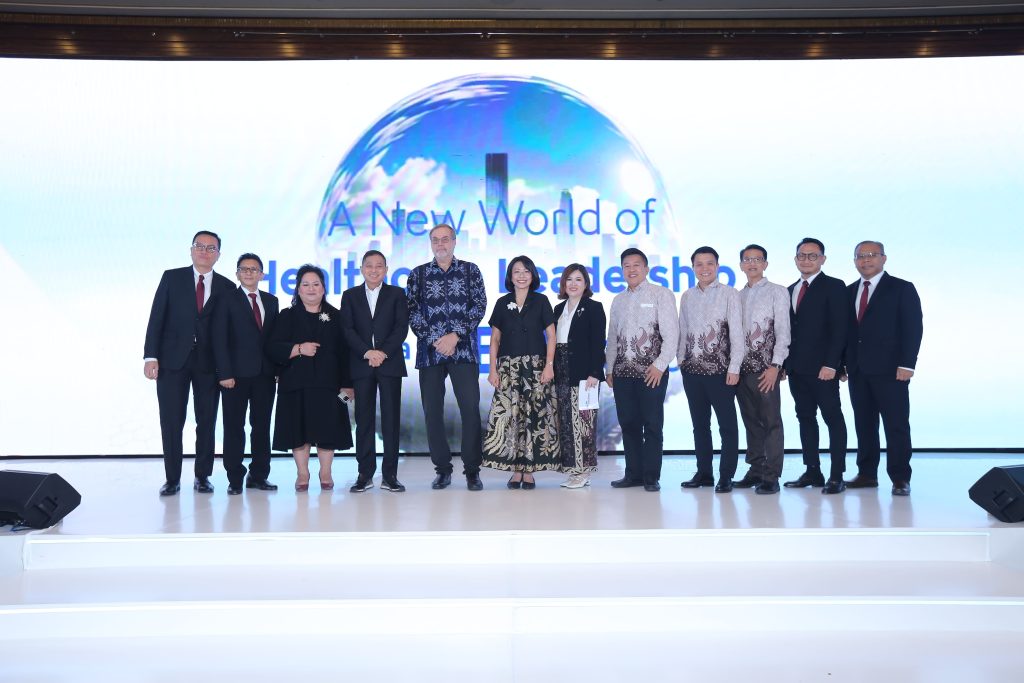
Jakarta, February 5, 2026 – PT Sysmex Indonesia, in collaboration with PT Quantum Infra Solusindo, PT Saba Indomedika and PT Kristalab Surya Medika, successfully hosted the CEO Forum 2026 at the Four Seasons Hotel Jakarta. The event brought together healthcare leaders and executives to discuss strategies for Navigating a New Era of Healthcare Shaped by Rapid Technological Advancement, Increasing Complexity, and Rising Expectations for Quality Care. Under the theme “A New World of Healthcare Leadership” the forum emphasized the importance of adaptive, innovative, and data-driven leadership in supporting resilient and sustainable healthcare organizations. As healthcare systems evolve, leaders are challenged not only to maintain clinical excellence but also to translate strategic vision into effective and sustainable implementation. The forum was officially opened by Prof. dr. Dante Saksono Harbuwono, Sp.PD-KEMD, Ph.D, Vice Minister of Health of the Republic of Indonesia, who highlighted the importance of aligning national healthcare policies with the readiness of healthcare institutions in supporting Indonesia’s Health Transformation Program. He emphasized that successful healthcare reform depends on leadership capable of translating strategic policy into consistent and sustainable operational implementation. The forum also highlighted the importance of collaboration in supporting healthcare transformation. Sysmex presented innovations in diagnostic technology and automation to enhance laboratory efficiency and accuracy, while Quantum Infra Solusindo introduced Medinfras, a connectivity solution designed to integrate medical devices with hospital information systems. Together, these technologies support more efficient workflows, reduce manual processes, and enable real-time access to clinical data. By combining diagnostic innovation with system integration, healthcare organizations are better equipped to improve operational performance and support data-driven decision-making. Initiatives such as the CEO Forum reflect a shared commitment among healthcare leaders and technology partners to build more connected, adaptive, and sustainable healthcare systems in Indonesia.
The Integration of Medinfras HIS with Terumo Syringe & Infusion Pumps at National Hospital Surabaya
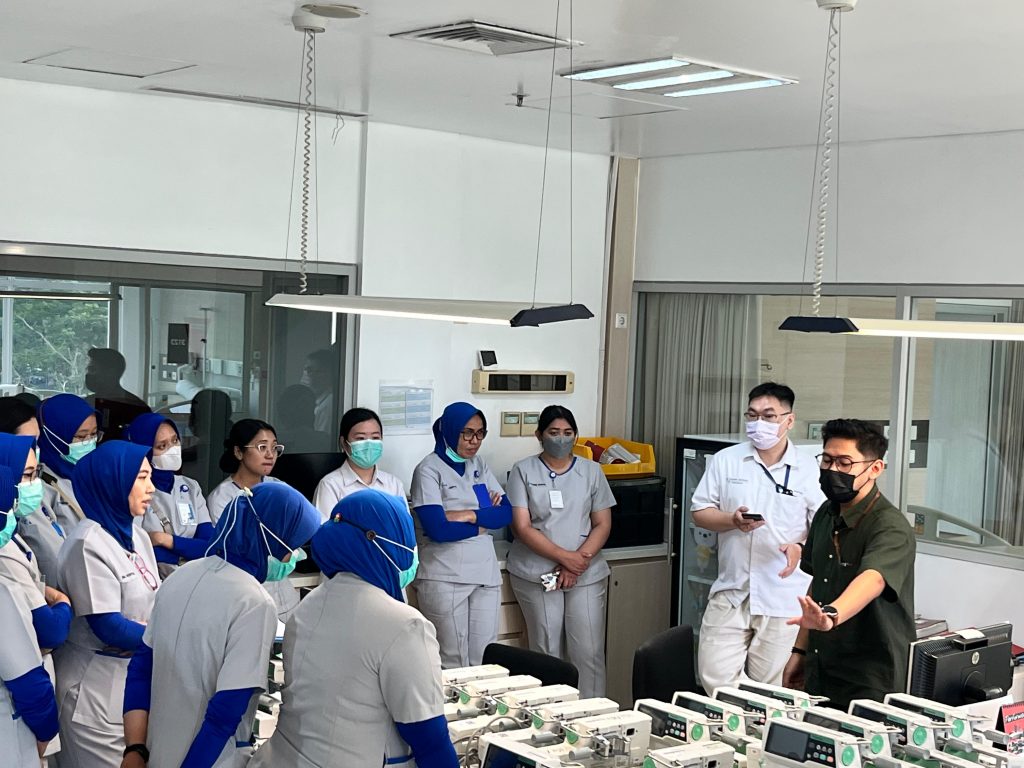
The Integration of Medinfras HIS with Terumo Syringe & Infusion Pumps at National Hospital Surabaya Digital transformation in hospitals is no longer limited to electronic documentation. It has evolved into seamless integration with critical medical devices. As part of its commitment to delivering modern, interoperable healthcare solutions, Medinfras officially launched the integration of Medinfras Hospital Information System (HIS) with Terumo Syringe & Infusion Pumps at National Hospital. This milestone marks a significant step toward enhancing patient safety, improving operational efficiency, and ensuring clinical data accuracy—particularly in inpatient wards and intensive care units (ICU). Direct Connectivity to Terumo Syringe & Infusion Pumps Through this integration, Medinfras HIS is now directly connected to syringe and infusion pump devices manufactured by Terumo Corporation. Data from the devices is automatically transmitted into the system in real time, eliminating the need for manual documentation. Key benefits include: Reduced risk of human error in fluid administration records Improved accuracy of infusion rate and volume documentation Real-time clinical data availability for informed decision-making This direct integration supports a safer and more reliable medication and fluid management process. Automated Integration with Intake-Output (I/O) Monitoring Infusion data is automatically synchronized with the Intake-Output (I/O) monitoring feature within Medinfras HIS. As a result: Fluid intake is recorded automatically Fluid balance calculations become more accurate Physicians and nurses can monitor patient conditions in real time This feature is particularly critical for ICU patients and those requiring strict fluid balance monitoring, such as patients with renal or cardiovascular conditions. Smart Pump Monitoring Dashboard at the Nurse Station A key highlight of this integration is the Smart Pump Monitoring Dashboard, strategically located at the nurse station. The dashboard enables nurses to: Monitor all connected syringe & infusion pumps from a centralized interface View real-time infusion rates and remaining volumes Quickly identify devices requiring immediate attention Centralized monitoring enhances workflow efficiency and enables faster response times to clinical needs. Source: patient experience with smart infusion pump video NH, Medinfas, Terumo Proactive Real-Time Alert System To further enhance patient safety and operational responsiveness, thesystem is equipped with automated alerts, including: Notifications when infusion fluids are running low Alerts when fluids are depleted Device malfunction or error notifications Additional configurable clinical alerts These alerts are displayed directly on the monitoring dashboard, allowing medical staff to take prompt action without relying solely on bedside alarm sounds. Enhancing Patient Comfort, Especially in the ICU Beyond operational efficiency, this integration significantly improvespatient experience. With centralized monitoring and proactive alerts at the nurse station: Response times are faster Unnecessary bedside alarm disturbances are minimized ICU patients experience greater comfort and reduced noise disruption This approach ensures that patient care remains both technologically advanced and patient-centered. Medinfras Commitment to Smart Hospital Innovation The successful implementation at National Hospital demonstrates how Medinfras HIS, built on a modern and scalable architecture, enables true interoperability between hospital systems and critical medical devices. Medical device integration is no longer optional—it is a strategic foundation for: Patient Safety Clinical Data Accuracy Operational Efficiency Sustainable Digital Transformation Medinfras remains committed to empowering hospitals with intelligence, connected, and future-ready healthcare ecosystems.
QIS NEW START 2026
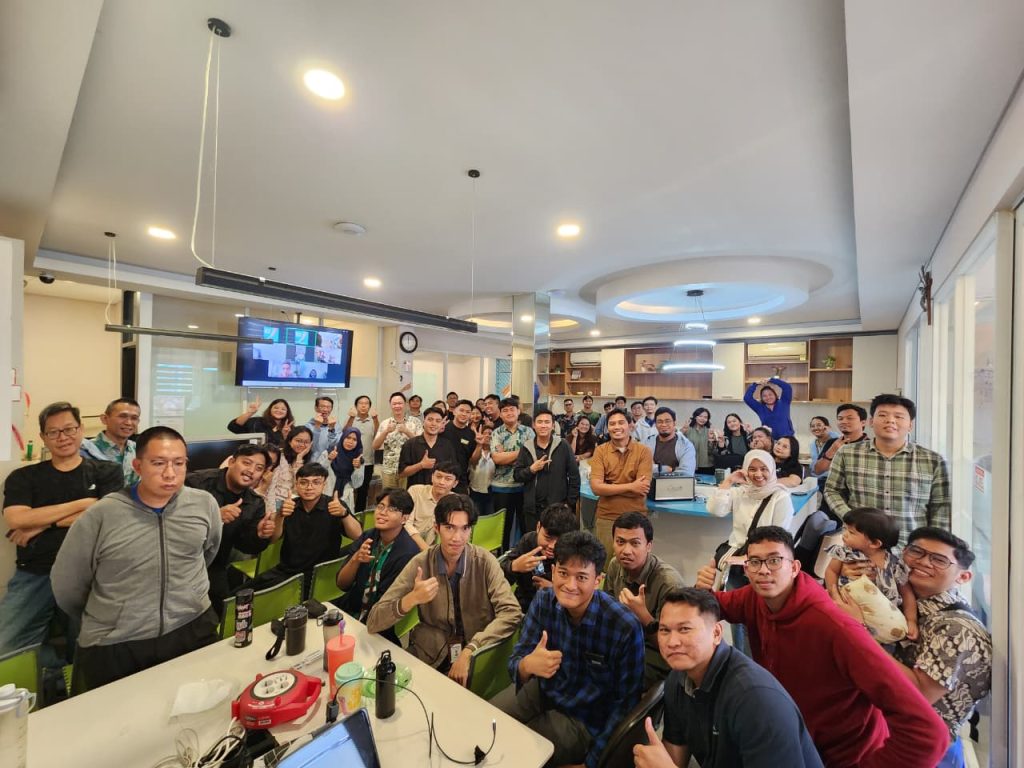
PT Quantum Infra Solusindo Hosts QIS NEW START 2026: Driving Healthcare Transformation through Strategic Innovation JAKARTA – PT Quantum Infra Solusindo successfully held the QIS NEW START 2026 on Saturday, January 17, 2026. The event was attended by the Board of Commissioners, Directors, Managers, and the entire workforce of the company. During the session, Mr. Benny Hendra, Director of PT Quantum Infra Solusindo, emphasized that amidst the rapid digital transformation within the healthcare sector, the company has established a strategic direction centered on four core pillars: Rise of AI, Security, Interoperability, and Microservices Architecture. These four focus areas serve not only as a technological roadmap but also as a fundamental framework to ensure that the systems developed remain adaptive, secure, and sustainable. This strategic approach is further bolstered by the implementation of the Gemba Walk—a methodology involving direct field observations to gain a profound understanding of actual processes, operational challenges, and the authentic needs of system users. To conclude the QIS NEW START 2026 series, Department Managers presented the Key Performance Indicator (KPI) targets for their respective units. These discussions went beyond mere numerical objectives, focusing instead on performance enhancement strategies and cross-departmental collaboration. This ensures that every initiative remains strictly aligned with the overarching corporate vision.
National Seminar on Data Management & ArtificiaI Intelligence for Healthcare

As a member of the Indonesian Healthcare Association (AHI), PT Quantum Infra Solusindo, as a SIM-RS application developer, will work alongside the best practices in the healthcare sector. At the National Seminar on Data Management and Artificial Intelligence for Healthcare organized by CIO Healthcare Indonesia, it was emphasized that the era of digital transformation in the healthcare sector has changed the way data is managed and medical services are provided. Data has now become a strategic asset that must be managed systematically in order to support innovation and evidence-based decision making. In this context, good data management and the use of Artificial Intelligence (AI) are two main pillars that complement each other to improve the quality of healthcare services. The event opened with a keynote speech by Setiaji (Chief Digital Transformation Office of the Ministry of Health), who provided participants with insight into the Data Management Body of Knowledge (DAMA-DMBOK) framework, which covers 11 main areas of knowledge, namely 1. Data Governance 2. Data Architecture 3. Data Modeling & Design 4. Data Storage & Operations 5. Data Security 6. Data Integration & Interoperability 7. Documents & Content Management 8. Reference & Master Data 9. Data Warehousing & Business Intelligence 10. Metadata Management 11. Data Quality. The application of DAMA for healthcare facilities includes Data Management Maturity Assessment (DAMA Maturity Assessment) Improving Training and Certification of Talent in the field of Health Data Management (e.g. CDMP) Establishing a clear Data Governance Structure (roles of Data Owner, Data Steward) Alex Budiyanto, President of DAMA Indonesia Jakarta, also emphasized that amid the complexity and dynamics of the healthcare system, Data Management as a comprehensive discipline is the main foundation in maximizing the strategic value of healthcare organizations data assets. In the context of the health sector, data management plays a crucial role. This is due to the sensitivity, complexity, and large volume of medical data, which demands high standards in terms of security, quality, and integrity. The implementation of Electronic Medical Records (EMR), which has been mandated through Minister of Health Regulation No. 24 of 2022, is an important milestone in the digitization of health services. All healthcare facilities are required to adopt EMR and integrate it with the national SATUSEHAT platform, which is the backbone of Indonesia’s health information system. Furthermore, Artificial Intelligence (AI) has opened up great opportunities to improve the efficiency and effectiveness of healthcare services. However, the success of AI implementation is highly dependent on the quality, completeness, and representativeness of the data used as training data. Without a strong data management foundation, there is a risk of bias, inaccuracy, and failure of AI models to generalize to the population. Intel Corporation, widely known as the world’s largest processor company, is also contributing to increasing the use of AI in the healthcare industry with its AI innovation, namely the launch of OpenVINO™ IPEX-LLM. Fransiskus Leonardus (Enterprise Country Lead Indonesia INTEL) explained the use of AI Triage “Intelligent Medical Triage,” the use of AI for clinical transcription “Intelligent Transcription for Clinical Documentation,” and the multimodal AI assistant for Clinical Confidence “Multimodal Vision Assistant.” Next, Julian Petrescu (Senior Business Development Manager at Intersystem) explained how Generative AI will work in the healthcare industry today and in the future. Basically, the specific objectives of this seminar were to encourage the implementation of DAMA-DMBOK-based data governance, achieving data architecture standardization and interoperability, strengthening data security and regulatory compliance, optimizing healthcare data quality management, accelerating the adoption of AI technology in healthcare services, evaluating case studies and measuring the impact of AI, mitigating risks and implementing ethical AI, and building a collaborative digital healthcare ecosystem. Source: Seminar Nasional: Data Management & AI for Healthcare – CIO Healthcare Indonesia Term of Reference Seminar Nasional Data Management & AI for Healthcare
iDRG Feature in Medinfras? READY!
iDRG (Indonesian Diagnosis Related Groups) is a patient case classification system based on diagnosis, medical procedures, age, comorbidities, and length of stay. It is used to determine healthcare service tariffs paid by BPJS Kesehatan to hospitals, replacing the previous INA-CBGs system. With iDRG, each patient case is grouped into categories that share similar resource usage levels. The goal is to create an output-based payment system, rather than one based solely on input costs or service volume. Previously, Indonesia used the INA-CBGs system, which grouped cases based on the primary diagnosis. However, it was considered insufficiently granular and not adaptive enough to medical technology advancements or patient outcomes. iDRG improves upon this with a more complex and detailed classification structure, inspired by successful models in countries like South Korea and Australia—where inpatient costs have decreased and service efficiency has improved. Evolution of iDRG Includes: Addition of MDC (Major Diagnostic Category) Grouping based on severity and complexity Integration with electronic medical records and BPJS e-claims Strategic Benefits of iDRG Implementation: Cost Efficiency: Service tariffs are more measurable and based on clinical data Claim Transparency: Structured claim processes with minimal manipulation Improved Medical Data Quality: Encourages more accurate medical recordkeeping National Standardization: Unifies claim formats and case grouping across healthcare facilities Outcome-Based Payment: Shifts hospital focus toward treatment results rather than service volume For hospitals, iDRG is not just a claim system—it’s a comprehensive transformation in service management. Key impacts include: Changes in information systems and SIMRS integration with the iDRG grouper Reduced BPJS claim rejection rates due to automatic validation Claim preparation time reduced from 7 days to just 2 days in some hospitals More accurate financial monitoring and claim audits HR Challenges: Intensive training required for coders and claim teams to understand ICD standards and iDRG mechanisms A successful example of iDRG implementation can be seen in the collaboration between Medinfras and RS ST. Elisabeth Semarang. The process began when the hospital submitted a trial request for the iDRG system to the Ministry of Health. Upon approval, RS ST. Elisabeth received intensive training and socialization on the iDRG-based e-claim mechanism as part of its technical and operational preparation. The E-Claim feature in Medinfras SIM-RS has become a flagship tool frequently used by Casemix users at RS ST. Elisabeth Semarang. With the emergence of the iDRG system, the hospital was eager to become a pilot site for the transition from INA-CBGs to iDRG under BPJS Kesehatan. Together with the Medinfras team, RS ST. Elisabeth initiated the development of the iDRG feature. Currently, the system has entered the User Acceptance Test (UAT) phase, aimed at evaluating its alignment with operational needs and applicable claim standards. This reflects PT Quantum Infra Solusindo’s commitment to ensuring that the iDRG e-claim bridging system meets the required standards of quality, efficiency, and integration for hospitals. This case study demonstrates that with a collaborative, responsive, and needs-based approach, digital transformation in healthcare claim systems can be implemented effectively and sustainably. Source : https://www.healthical.id/menuju-standar-nasional-pelayanan-kesehatan-mengenal-idrg-dalam-sistem-klaim-bpjs/ https://123dok.com/id/docs/konsep-transformasi-idrg-dalam-pembiayaan-pelayanan-kesehatan-indonesia.12307336 https://ekonomi.bisnis.com/read/20250807/45/1900281/opini-sistem-idrg-di-tengah-potensi-inflasi-medis
Networking Dinner ARSSI 2025

Jakarta, July 9th, 2025, PT Sysmex Indonesia, in collaboration with PT Quantum Infra Solusindo and PT Saba Indomedika, hosted an exclusive Networking Dinner at Pan Pacific Hotel, Jakarta. This initiative was launched by PT Sysmex Indonesia as a strategic effort to engage prospects attending the 2025 Indonesian Private Hospital Association (ARSSI) event. Themed “Shaping Digital Healthcare,” the gathering underscored the pivotal role of technological transformation in Indonesia’s private healthcare system. This event was purposefully designed to build strategic relationships with invited prospects potential clients personally approached by PT Sysmex Indonesia, PT Quantum Infra Solusindo, and PT Saba Indomedika as part of a personalized and professional engagement approach. A highlight of the evening was the Interactive Discussion session moderated by Mr. Benny Hendra, S.Kom., MMR, Founder and Director of PT Quantum Infra Solusindo (Medinfras), a company specializing in Hospital Information System (SIMRS/HIS) solutions. The event featured two distinguished speakers Dr. Adhi Kristianto Sugianli, Sp.PK Subsp.PI(K), M.Kes., Ph.D., who presented on “Anywhere Access, Better Decisions: LIS for Modern Hospital Management” and Dr. Handoko Suwandi, who shared insights on “More than Just a LIS: Empower Your Manager with TOOLS.” With its core message of Shaping Digital Healthcare, the Networking Dinner reinforced the position of PT Sysmex Indonesia, PT Quantum Infra Solusindo, and PT Saba Indomedika as strategic partners committed to accelerating the digital transformation of Indonesia’s private healthcare sector. Through a well-structured forum and the presence of relevant potential partners, this event marked a concrete step toward initiating impactful digital collaboration.
PETIRS workshop “Integration of SatuSehat Level 2 Batch 2 Plus PDP”

PETIRS is the Hospital Information Technology Association, an organization comprising information technology professionals in the hospital sector with the mission of enhancing IT knowledge and skills to support the government’s health digitization program in Indonesia. In order to assist hospitals in overcoming difficulties in implementing Permenkes No. 24 Tahun 2022 concerning Medical Records and Undang-Undang No. 27 Tahun 2022 concerning Perlindungan Data Pribadi (PDP), PETIRS is organizing a workshop titled “Integration of SatuSehat Level 2 Batch 2 Plus PDP” to present the conceptual framework of SatuSehat, a government program and national health data integration initiative. The workshop was held on July 10–12, 2025, at the Grand Kemang Hotel in Jakarta, featuring speakers from TTDK (Tenaga Teknis Data Kesehatan) Kemenkes, Pusdatin (Pusat Data Teknologi Informasi), and Aswin Hadi, S.S.T., M.Eng, as the lead assessor for information security and cybersecurity in the health sector. The speaker from TTDK Kemenkes presented several topics ranging from Indonesia’s electronic medical record policy, SatuSehat terminology standards, data mastering, to SatuSehat interoperability. The second speaker, Aswin Hadi, discussed the concept of Perlindungan Data Pribadi (PDP). The workshop was attended by 40 participants not only PETIRS members, but also open to IT Development teams of Hospital Information Systems (HIS). Therefore, PT Quantum Infra Solusindo sent two representatives to the workshop, namely Michael Andhika Prakasa as R&D Development and Blasius Richo Prasojo as Project Management. According to Richo, this workshop has helped us understand the direction of SatuSehat’s development and how it will be implemented. In addition, in terms of regulations, we’ve become more aware of the Undang-Undang Perlindungan Data Pribadi (PDP) that oversees the process, from how the data is managed to who is allowed to access it. “Technically, we received updates on the terminology data mapping provided by SatuSehat, gained a better understanding for radiology data transmission, and also conducted data coding tests. PETIRS also shared updates on the types of data that need to be submitted to SatuSehat,” said Michael. Meanwhile, according to Michael, there was also something interesting about the event, a sharing session by Dodi Naftali, an IT representative from RSUP Dr. Sardjito, which is one of the pilot projects yang selaras dengan regulasi.
Successful ISO 9001:2015 and ISO 27001:2022 Upgrade

PT Quantum Infra Solusindo remains committed to improving quality and compliance with international standards by conducting regular ISO audits, including internal audits and external audits. Audits are an important step in ensuring the implementation of quality management systems and information security systems is effective and in accordance with applicable ISO requirements. PT Quantum Infra Solusindo has successfully completed an external audit and obtained ISO 9001:2015 certification and an upgrade to ISO 27001:2022 on April 21–22, 2025. The external audit was conducted by the ISO Certification Body Sistema, which is part of the United Accreditation Foundation (UAF) and has been verified by the International Accreditation Forum (IAF). The audit activities were carried out by all company employees together with external auditors Dedy Taufik and Ignatius Irawan, who were tasked with ensuring compliance and consistency in the implementation of the ISO 9001:2015 and ISO 27001:2022 standards at PT Quantum Infra Solusindo. The company has also conducted internal audits by a team of certified auditors to ensure compliance with applicable policies and procedures, identify risks, and provide recommendations for improvement. With the audit findings and recommendations, it is hoped that corrective actions and further measures can be taken to increase the company’s effectiveness and compliance. PT Quantum Infra Solusindo is grateful for the support of all employees and parties who have contributed to the implementation of the ISO audit. The company is committed to continuing improvement to achieve the best quality standards.
ISO 9001:2015 Surveillance Audit and ISO 27001:2022 Upgrade for PT Quantum Infra Solusindo

PT Quantum Infra Solusindo conducted an ISO 9001: 2015 Surveillance I Audit and ISO 27011: 2022 Upgrade as part of its commitment to improving the quality of its quality management system and information security. The audit was conducted from April 21-22, 2025. The audit was conducted by Quality Systema institution with auditors Dedy Taufik and Ignatius Irawan which aims to ensure compliance and consistency in the implementation of ISO 9001: 2015 and ISO 27001: 2022 standards at PT Quantum Infra Solusindo.
What is KYC?

What is SATUSEHAT MOBILE ? SATUSEHAT Mobile is the official health application from the Ministry of Health of the Republic of Indonesia, designed to provide trustworthy, integrated health information and services, helping Indonesians maintain their well-being.Some key features available in SATUSEHAT Mobile include: Health Diary Medication Reminder Find Medicine Find a Doctor Health News Health Bulletin Vaccination History Integrated SATUSEHAT Electronic Medical Record Journey Routine Immunization History Child Growth Tracking Medical Records What is the Medical Records feature in SATUSEHAT Mobile? The Medical Records feature stores electronic medical data sent from healthcare facilities (Fasyankes) to the SATUSEHAT Platform, which users can access via the Medical Resume menu in the SATUSEHAT Mobile app. This feature benefits users by: Allowing personal ownership of medical record data from all healthcare facilities. Providing convenience with digital accessibility through the app. Enabling easy access to medical data for more accurate diagnoses and treatments, especially when switching facilities or in emergencies. Ensuring security with identity protection during Verification (KYC) and PIN creation. What is the Profile Verification (KYC) feature in SATUSEHAT Mobile? Profile Verification (KYC) is a process for verifying users’ identities by collecting information and data on SATUSEHAT Mobile. KYC is the first step for users to link their Primary Account in SATUSEHAT Mobile to their medical records using a SATUSEHAT Number. This process only needs to be completed once and can be used across all SATUSEHAT-connected healthcare facilities. Healthcare facilities are required to integrate medical devices with digital systems to ensure smooth workflow and improve patient safety. Examples of these integrations include: Laboratory devices connected to a Laboratory Information System, which then links to hospital or clinic management systems. Integration of hospital management systems with bedside monitors, vital sign measurement tools, infusion pumps, etc. For users, SATUSEHAT Mobile simplifies healthcare processes by providing transparent medical records. Data security is ensured through KYC verification before granting access. How can patients complete Profile Verification (KYC) in SATUSEHAT Mobile? Find a healthcare facility offering KYC verification (check the Verification Location (KYC) feature in SATUSEHAT Mobile). Bring an official ID (KTP) and visit the registration counter. Open the SATUSEHAT Mobile profile and check the access code, then enter it manually or with assistance from staff. Staff will verify that the KTP matches the user’s profile. Profile verification is successful (a checkmark appears). Go to the Medical Resume feature and create a secure PIN. How can healthcare facilities enable Profile Verification (KYC)? Healthcare facilities must meet the following requirements: Their Electronic Medical Record (EMR) system must be connected to the SATUSEHAT Platform. Their EMR system must have successfully integrated SATUSEHAT’s KYC module. Can SIM-RS Medinfras integrate with SATUSEHAT’s KYC? SIM-RS Medinfras is a hospital management system that helps healthcare facilities manage administrative, clinical, and financial processes. It supports national and regional integration requirements. Thanks to its commitment, SIM-RS Medinfras is integrated with the SATUSEHAT Platform. Healthcare facilities using SIM-RS Medinfras can send the required data parameters to SATUSEHAT smoothly. KYC is part of the Ministry of Health’s national initiative to implement integrated medical records, and SIM-RS Medinfras has successfully deployed KYC integration across multiple healthcare facilities using its system.