World Blood Donor Day: Advancing Efficient & Accurate Lab Services through Integration of Hematology Analyzers and Hospital Information Systems
Do you donate your blood regularly? A single drop of your blood can give hope and save the lives of many people in need. In 2005, the World Health Organization and three international organizations involved in blood donation initiated “World Blood Donor Day,” which is observed every June 14. June 14 was deliberately chosen because it coincides with the birthday of Karl Landsteiner, the scientist who discovered the blood group system. This annual global event is held as a reminder and a form of appreciation for the millions of volunteers who regularly donate their blood.
In the blood donation process, there is a series of examinations and medical procedures carried out to ensure the safety and quality of the blood to be used. The blood donation process begins with registration and an initial examination, where the staff ensures the health condition of the prospective donor. After that, blood is drawn in a safe amount, and then a blood sample is sent to the laboratory for testing. These tests determine blood type, hemoglobin levels, and other health conditions. The results help ensure a safe donation, both for the recipient and the donor, while also ensuring a high-quality blood supply.
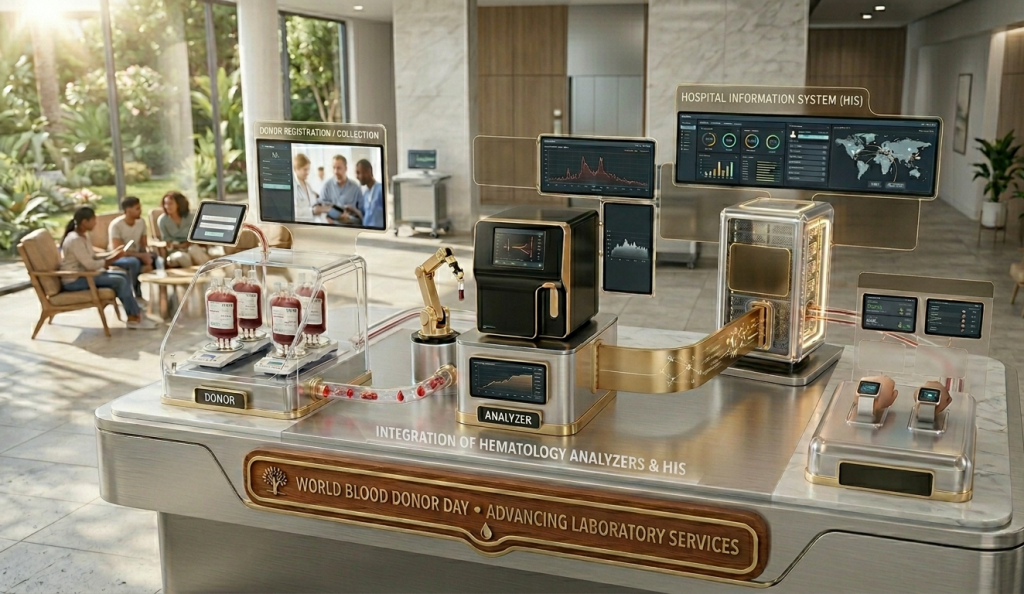
Hematology examination becomes one of the important stages in assisting medical personnel in evaluating blood conditions, both for donor screening needs and patient care. Each blood sample must be examined carefully, from blood type to other health parameters. This is where technology plays a significant role. The integration of a hematology analyzer with the Hospital Management Information System (HMIS) allows examination results to be obtained automatically and accurately.
With the integration between laboratory devices such as the Sysmex’s Hematology Analyzer and the hospital information system, it ensures that examination results are obtained automatically and accurately. Through integration with Medinfras’ Hospital Information System (HIS), the management of examination data can be carried out quicker, in a structured manner, and in an integrated way to support higher quality healthcare services. Technology integration not only enhances service quality but also supports safety and security in accordance with existing standards. Thus, the blood donor process in hospitals becomes safer, more efficient, and quality-assured, supporting a better overall service ecosystem for patients and donors.